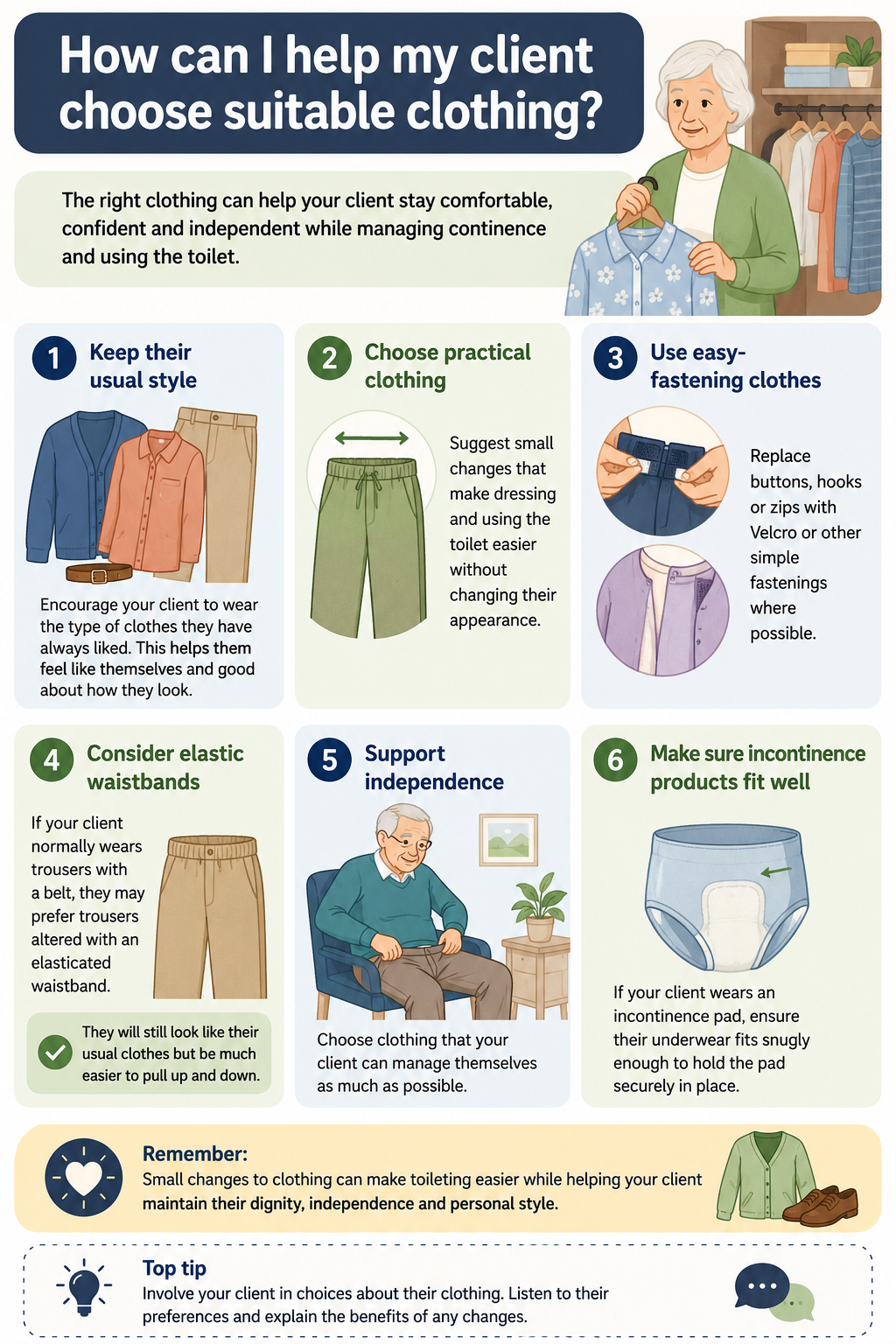
9. How can I help my client choose suitable clothing?
Key points

Clothing style
- Think about the type of clothes your client likes to wear and try to keep this the same.
- You may need to negotiate with your client, encouraging them to adapt their clothing to be more practical and enable them to manage their toileting independently.
Practical Tips
- Adapting clothes can help someone maintain their preferred style of dress and independence.
- Have a supply of clean clothes readily available.
- People may take longer to wash and get dressed as their dementia progresses.
- Try not to rush your client as it can get them flustered or confused.
Take your time
People with dementia may become flustered if they are rushed. Give them enough time to change out of wet or soiled clothing and be led by your client as to how much help they want. Encourage them to choose the clothes they want to wear rather than making the choice for them, helping them to stay in control.
Give your client one piece of information at a time to avoid confusing them. For example, if you are asking them to choose some clean clothes, present the choice of one garment at a time and not multiple items. This might mean asking them to choose one of two shirts, followed by the choice between two pairs of trousers.

“ It’s not a five minute job, you need to give that person plenty of time to: ‘Okay, I need to take my wet clothes off, I need to put my dry clothes on, I need to make sure that I’m not putting my wet clothes back on’. And just not necessarily taking over. I mean, they might want you to, they might go: ‘Yes, just do it for me, I’ve had enough’. And that’s absolutely fine. But again, being led by that person”.
“Ask: ‘Can I take your wet clothes away and pop them in the machine?’ OR: ‘Can I put your wet clothes here so that you can pop them in the machine, but so they’re away from the dry clothes?’, because that person might still want the independence of popping their clothes in the machine”.
Laundering
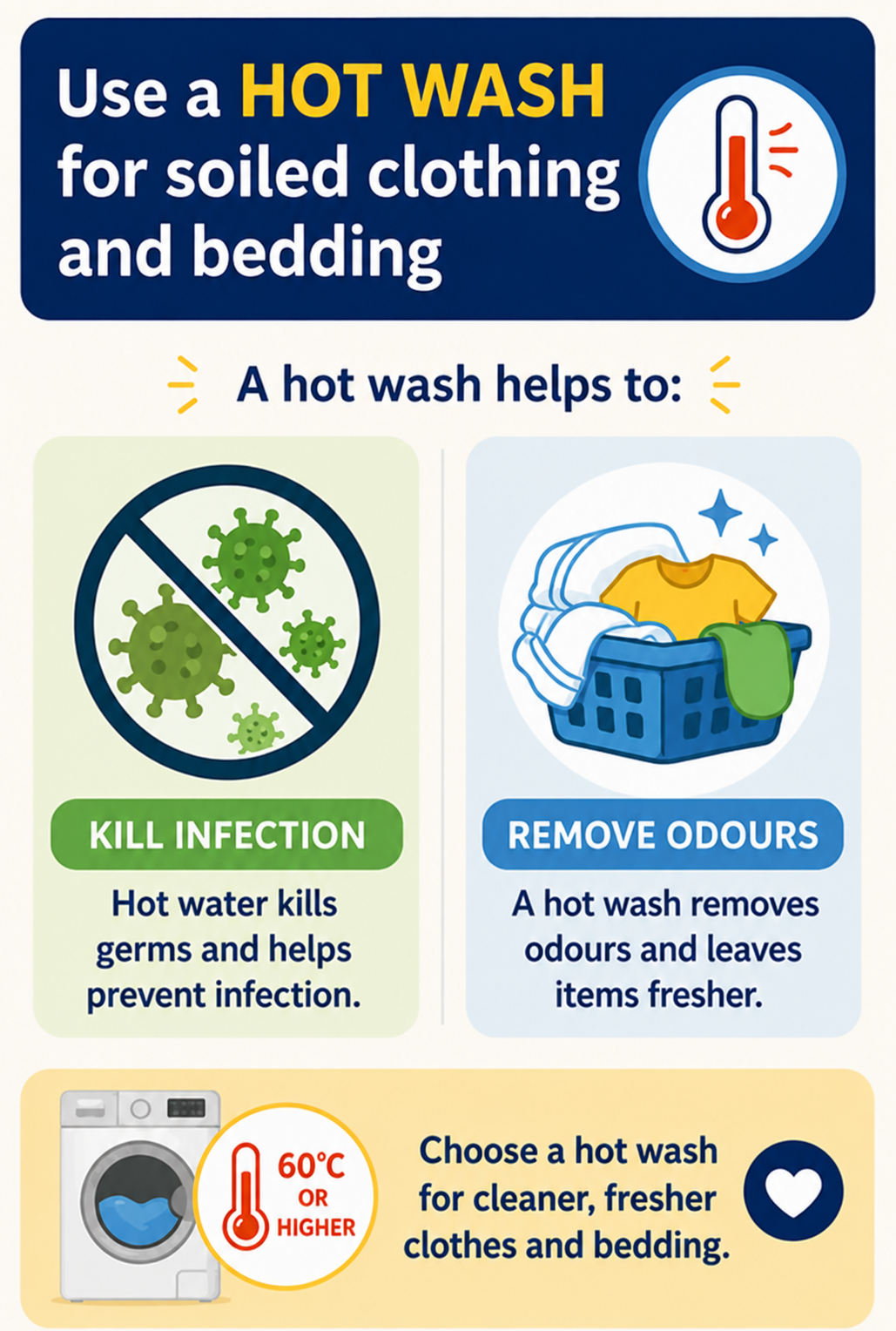
Have a good supply of clean, dry clothes, nightwear and bedding. Your client may need to have a few more items of clothing or pyjamas if they are frequently becoming soiled or wet. Their family may need to be asked to replace clothing. A hot wash should be used for soiled clothing and bedding.
You might suggest to your client or family members that some clean items of clothing, such as pants and trousers, are kept in the toilet so that they are close at hand if needed.