10. What will keep my client safe if they need the toilet at night?
Key points

Incontinence at night
Some people with dementia get more confused at night. This can lead to incontinent episodes, even if they stay dry during the day. To help reduce problems at night you can consider supporting your client to:
- Wear an incontinence product at night such as incontinence pants, or a sheath for men (see section 7).
- Protect the bed with a waterproof mattress cover and/or a washable sheet (see section 11).
- Use waterproof bedding (see section 11).
- Wear nightclothes made from material that is easy to wash and dries quickly (see section 9).
You can find information about bed-protecting products on the Continence Product Advisor (CPA) website.
The CPA website also has information about incontinence products for both men and women.
Avoid falls
People are more likely to fall when it is dark. To help keep your clients safe, encourage them to:
- Keep a low-level, dim light on so they can see.
- Use motion-sensor lights if they don’t want a light on all night and don’t find the sudden lighting scary.
- Keep the path to the toilet or bathroom clear of anything they might trip over such as rugs, extension leads and pets.
- If relevant, keep their walking aid within easy reach of their bedside.
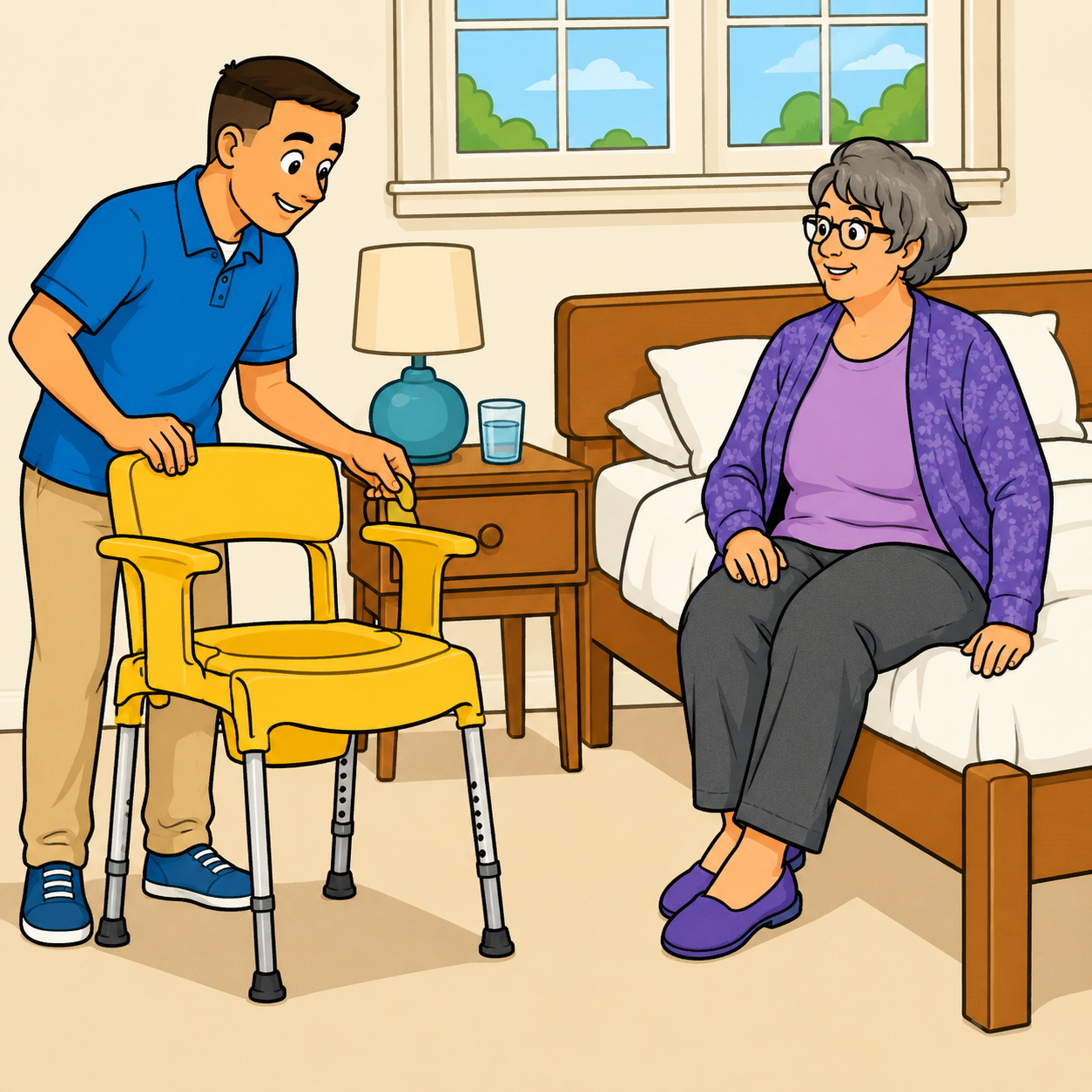
If someone walks slowly or has trouble walking, you can suggest having a commode or urinal next to their bed.

“Having that motion sensor light means that: ‘Right, okay, I’ve jumped out of bed, I’m using the commode, motion sensor lights have come on so you can see’. Equally, anyone else sharing that room is also aware that: ‘Oh, you’re up. What’s going on?’ “.
Practical Tips
- Suggest having a commode or urinal next to the bed, especially if your client walks slowly.
- Low-level lighting at night can help avoid falls.
- Keep the route to the bathroom or toilet free from obstructions and trip hazards.