
3. How to keep using the toilet independently
Key points
- If you feel the need to have a pee or poo, do not delay in getting to the toilet.
- Getting into good routines can help you to remain continent.
- Making adaptations to your home and clothes can make it easier to use the toilet.

Can a routine help?
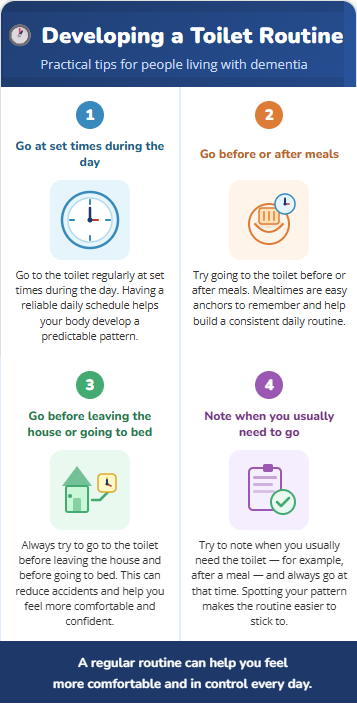
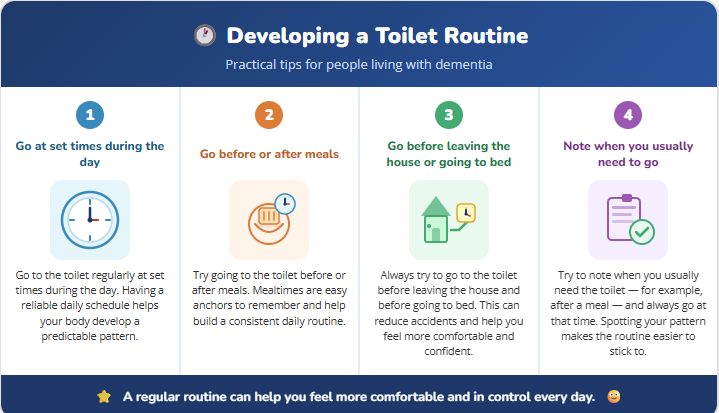
Most people’s bladders and bowels respond well to a routine, but it’s not something that we often think about. Being aware of your toilet routine early in dementia can help you understand what works for you and what is normal for you. For example, for some people it is normal to have a poo three times a day, but others only once every three days.

“I think there’s a lot about making things easier for yourself when you’ve got dementia. It is about routines”.
Christopher lives in S. E. England
There are some things that you can do to support a healthy routine. For example, for some people, having a poo after breakfast each morning can help their body get into a regular habit. Later on, you may find it harder to notice when you need a poo and it might be helpful if using the toilet is already part of your routine.
“So, catch it as early as possible and make it part of your life rather than something that's got to be done or something that's got to be incorporated later on when it's not such a habit”.
Roberta lives in N. W. England
“I know that I wee and then I wash my hands and then I take my medication and then I brush my teeth and then I leave the bathroom. If I've got a minty fresh mouth, I know I've done all the rest”.
Jonathan lives in S. W. England
What can I do around my home that might make it easier to keep using the toilet?
If problems develop it’s important to make going to the toilet as easy as possible. Here are some things to think about:
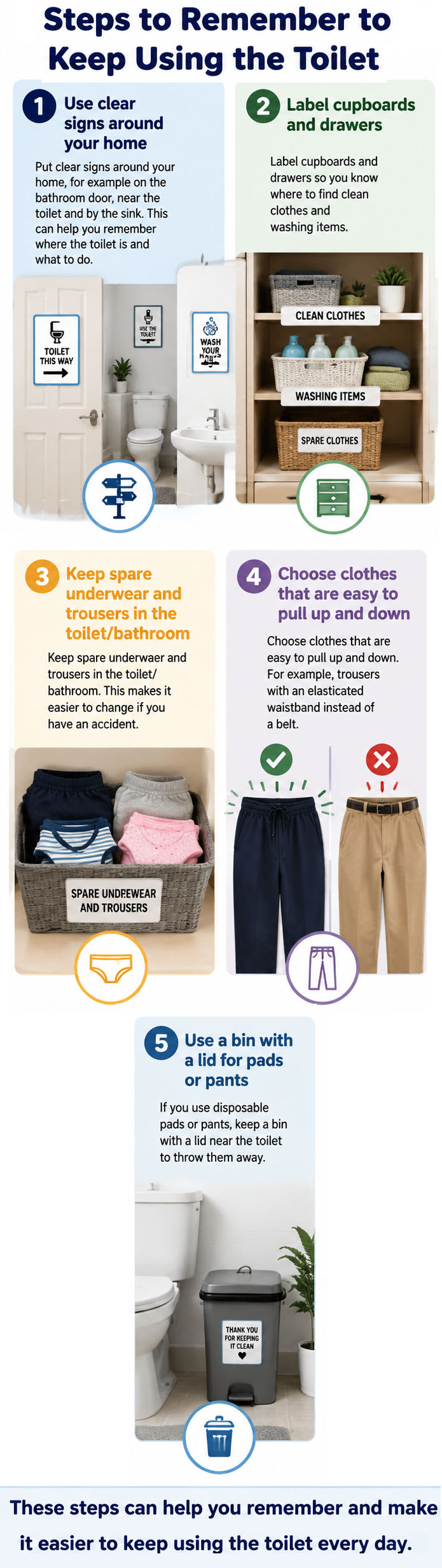
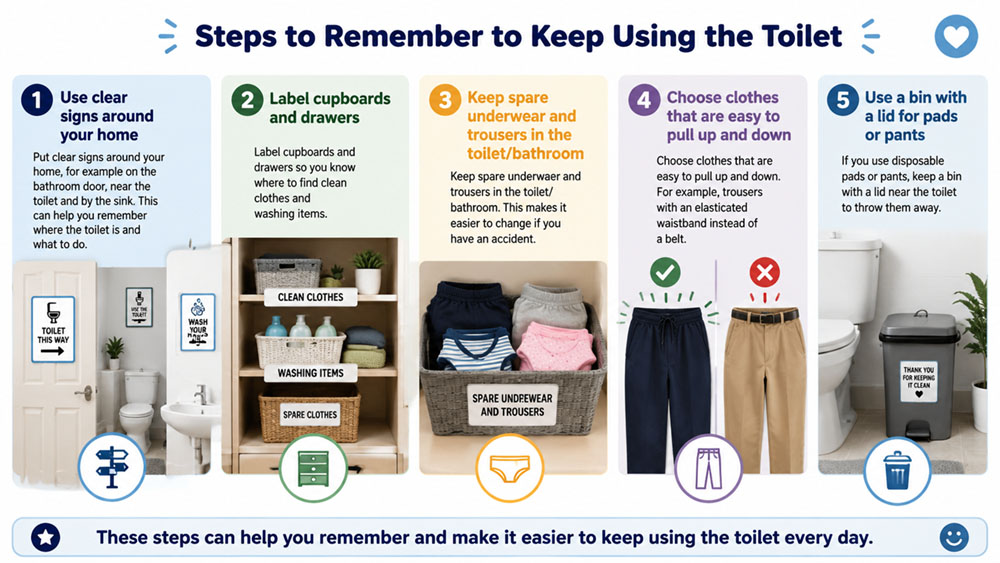
- Keep clothing simple by replacing zips, belts or buttons with elasticated waists or Velcro fastenings. These can help make putting on and removing clothes easier, which is important when trying to use the toilet or change a pad.
- Use post it notes to remind yourself to use the toilet or what to do in the bathroom, e.g. “Don’t forget to wash my hands”.
- If equipment such as handrails or a raised toilet seat might help, ask your doctor or GP for a referral to an Occupational Therapist for advice.
- Check the area around the toilet (and the route to the toilet) for dangers, including bathmats and uncovered hot pipes. Non-slip flooring can be helpful. Try to keep the bathroom uncluttered.
- Is the lighting OK? A night-light plugged in at floor level in the bedroom might help you see the path to the bathroom more clearly. Also, a motion-activated, battery-operated night-light in the bathroom might be helpful to avoid sudden bright light at night.
- If you struggle to find the bathroom, make the location clear either by leaving the door open or putting a sign or picture of the toilet on the door. It might also help to keep the toilet lid up so you can see the bowl.
- Having the toilet seat a different colour to the rest of the toilet can help.
- If you have problems getting to the toilet in time, then you could try using products such as a commode or a handheld urinal. There are a range of products available. Find out more about these on the Continence Product Advisor website.
What can I do day-to-day to help?
When you are living with dementia, things may not always go as planned, but learning new ways to cope and manage the changes can help.
“I think it’s important when you get older to recognise that you’ve got to adapt to your health changes”.
Anthony lives in Yorkshire and Humber
Everyone is different and the tips in this guide will work for some and not others. You may want to try things that have worked for some people with dementia to stay managing the toilet by themselves, such as:
- Keeping a simple list in the bathroom with steps to follow to pee or poo, e.g. a reminder to change a pad or to wash hands.
- Having a reminder about how to clean yourself and deal with dirty clothes if you get caught short.
- Leaving enough time to get organised so you do not feel rushed. This could include making sure you are using a continence pad if you need one.
- Some people find it helpful to set up reminders on their phone so that they don’t have to keep watching the clock. If you are busy when the reminder goes off, if possible stop what you are doing and make a trip to the toilet.
- Don’t ignore the urge to pee or poo (the ‘call to stool’). This means making sure you listen to your body’s signals that you need to have a poo or pee.
You can read more in the next sections about managing at night and when going out.
“Put a reminder on your phone and you can do it for every two and a half hours. The buzzer will go and it'll play tinkle, tinkle, tinkle means I've got to go for a wee. So, nobody has to know and say, “Go for a wee”. It just goes tinkle, tinkle, tinkle. It can be quite discreet”.
Jonathan lives in S. W. England
“I think I'm somebody who thinks, “I'll go in a minute, I'll go in a minute,” and I'm not somebody that should say, “I'll go in a minute,” I'm somebody who should say, “Oh, I need to go to the toilet, I must go”.
Beth lives in S. E. England