
2. Keeping my bladder and bowel healthy
Key points
- Keep well hydrated by drinking 5-8 glasses of liquid a day.
- If you are experiencing diarrhoea or constipation, consider reviewing what you are eating and drinking.
- If you are concerned that medication you are taking may be causing diarrhoea or constipation consult your doctor or pharmacist.
- If you leak pee when you laugh or cough, you might benefit from doing pelvic floor muscle exercises.

What should I eat and drink to keep my bladder and bowel healthy?
Eating healthy food and drinking enough fluids is important for your bladder and bowel health.
- Eating and food choices
Different types of food can affect your bowels, for example making you need to go to the toilet urgently or contributing to constipation.
Some foods can upset your bowels and make you need to poo quickly. Everyone is different and, if you have a strong urge to empty your bowels after eating, you might need to experiment with cutting out certain foods to see if it helps (see How to eliminate intolerances).
For some people, eating foods with fibre such as fruit, vegetables, nuts and seeds can help your digestion and prevent constipation. Staying active and moving around regularly if you can, might also help your digestion.
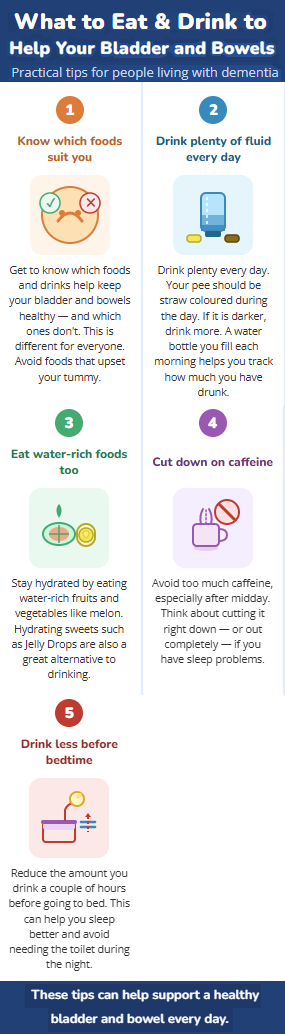
- Drinking and fluid choices
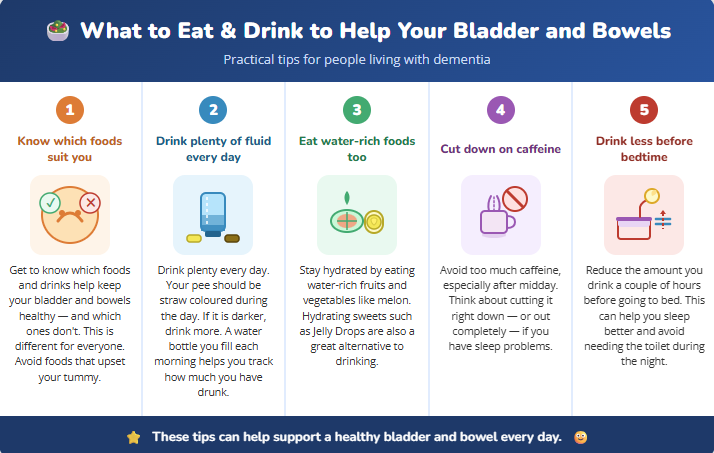
If you do not drink enough, you can become dehydrated. This can lead to bladder infections, constipation, tiredness and many other problems. Try to drink about 5–8 glasses/mugs of water, tea or other fluids such as soup each day. Foods with lots of water like fruits and vegetables can also help. The colour of your pee is a good guide to whether you are drinking enough. It should be pale yellow (straw coloured) except first thing in the morning, when it might be darker.
Some drinks can irritate your bladder and make you need to pee more often, especially at night. These include coffee or other drinks with caffeine (like tea or cola), ‘diet’ drinks, juices and alcohol. If you drink them later in the day, you may need to get up more in the night to pee. If you have problems at night, avoid drinks with caffeine after midday – most drinks have a ‘de-caf’ version.

“I used to have urge urinary incontinence, but I think it was probably because I rather liked the coffee, and now I drink chicory”.
Anna lives in Yorkshire
Things to watch out for
As you get older you can develop food intolerances, even to foods you have eaten for many years without any problems. This can sometimes cause changes in your bowel habits, such as diarrhoea.
If you begin to have problems with bladder or bowel control, it can help to ask yourself if any food or drink could be causing the problem. If you have changed your diet recently, or are having more of certain foods or drinks, they may be irritating your bladder or bowel.
For some people common bowel and bladder irritants can include::
| Foods (that can cause diarrhoea) | Drinks (that can irritate the bladder) |
|---|---|
| Spicy food | Alcohol |
| Fatty / fried food | Coffee (caffeine) |
| Some fruits | Tea (caffeine) |
| High fibre | Cola (caffeine) |
| Dairy products | Fizzy drinks |
| Artificial sweeteners | Citrus fruit juices - orange and lemon |
| High amounts of vitamin C | Drink these in moderation or cut them out |
“I’ve got a feeling that because there’s been some nice tomatoes, it’s made me a bit on the loose side”.
Anna lives in Yorkshire
How to manage intolerances
- Note down what is the likely cause (the list above is a starting point, but there might be other foods or drinks that affect you).
- Stop eating or drinking the thing that you think is the cause of your upset for a few days and see if that makes a difference.
- Re-introduce the food or drink to your diet slowly and watch for any recurrence of the problem. You may need to stop having it altogether.
- Consider if other factors could be the cause. For example, any tablets you might be taking, or if you have been unwell and might have an infection. See your GP or pharmacist for advice.
People with dementia might also have other causes of incontinence (like a weak pelvic floor or prostate problems) that are more common as we get older.
Medication
Medication can both help and hinder with managing your bladder or bowels. Some people take medication to help manage their bowels (either to help them poo or stop them going so much). However, it’s very easy to go too far and end up constipated or having diarrhoea. It’s about getting the balance right for you, which can be trial and error.
“I’ll bung myself up, so I don’t have this. But then, of course, you’ve bunged yourself up and it’s not a good idea. They did prescribe me a lot of Fybogel and…suppositories for a while…”
Anna lives in N. E. Yorkshire
Many medications that people take for a range of conditions (including dementia) can have unwanted side effects such as diarrhoea, needing to pee quickly, being unable to pee or constipation. If you are having any of these problems, it is a good idea to speak to your doctor or pharmacist and ask for a review of your medication.
“After I had the initial diagnosis I eventually got to see a consultant who prescribed a medication for me which didn't suit me at all. I just couldn't tolerate it. My gut couldn't tolerate it and I had really nasty diarrhoea, stomach cramps. It gave me some very odd side effects. I was having interfered vision and generally felt really not right at all. And so I was taken off that”.
Caroline lives in S. W. England
Exercise and pelvic floor muscles
Some people leak pee when they, for example, cough or laugh. If you do, you might benefit from doing pelvic floor exercises. It is helpful to be taught how to do these by a healthcare professional to make sure you are exercising the right muscles. Ask your GP for a referral to your local bladder and bowel service for an assessment if you think this might help. There are also online apps that provide tips and remind you to do the exercises.
The Squeezy App was developed by physiotherapists working in the NHS.